
How to build a sales funnel from scratch for lead generation
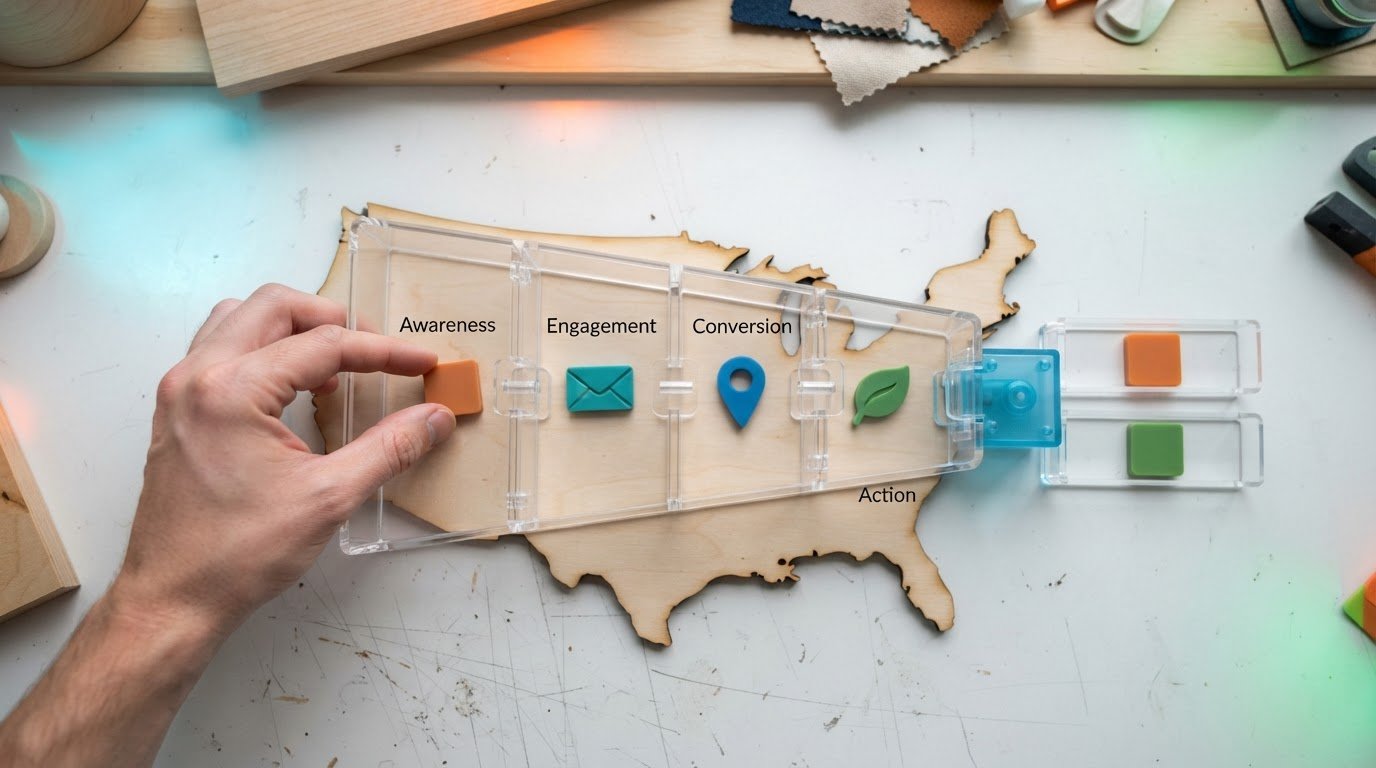
Building a sales funnel from scratch means creating a clear path from first awareness to becoming a customer. Its four stages are Awareness, Interest, Decision, and Action. Define what should happen at each stage to see where potential customers move forward, need more information, or lose momentum.
If leads arrive inconsistently or follow-up feels scattered, a funnel gives your sales and marketing efforts a shared structure. It works best when tailored to your customers and business. This guide explains why sales funnels matter, what each stage means, and how to choose lead-generation channels such as email, paid advertising, organic search, and social media. You’ll also learn what to prepare: the audience you want to reach, the offer that will attract them, and the next step you want each lead to take. Start with those essentials, then build a process you can track and improve.
Key Takeaways
- Map Awareness, Interest, Decision, and Action to the next useful step a potential customer should take.
- Choose lead-generation channels that fit your audience, and connect each one to a clear follow-up path.
- Define leads, prospects, opportunities, and closed deals so sales and marketing can track progress consistently.
- Before building, clarify your target audience, offer, funnel stages, and how you’ll track and respond to leads.
Why is the sales funnel important?
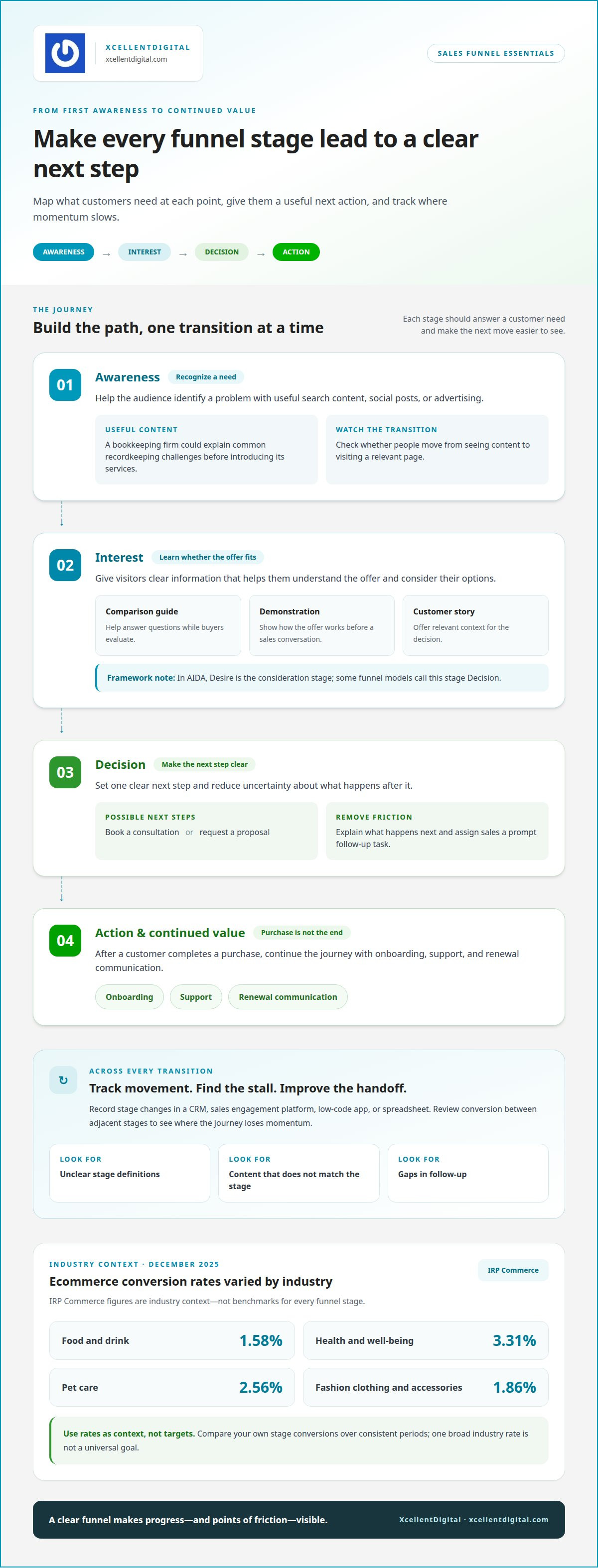
Map the buyer journey by matching each customer need to a next step: discovery, learning, evaluation, purchase, and continued value. A funnel makes these transitions visible, helping you spot where leads stall and improve the content or follow-up at that point.
- Build Awareness around the problem. Help your target audience recognize a need with useful search content, social posts, or advertising. For example, a bookkeeping firm could explain common recordkeeping challenges before introducing its services. Track whether people move from seeing the content to visiting a relevant page.
- Develop Interest and Desire. Give visitors clear information to help them decide whether your offer fits. In the AIDA framework, Awareness, Interest, Desire, and Action describe this progression. Desire is the consideration stage, sometimes called Decision in other funnel models. A comparison guide, demonstration, or customer story can answer questions before a sales conversation.
- Make Decision and Action easy. Set one clear next step, such as booking a consultation or requesting a proposal. Reduce friction by explaining what happens next and assigning sales a prompt follow-up task. After a customer completes a purchase, continue the journey with onboarding, support, and renewal communication.
- Track each transition. Record stage changes in a CRM, sales engagement platform, low-code app, or spreadsheet. A simple pipeline can show how many leads move from Awareness to Interest, then through Decision and Action. Review conversion between adjacent stages to identify where the journey loses momentum.
- Use rates as context, not targets. According to IRP Commerce, December 2025 ecommerce conversion rates were 1.58% for food and drink, 3.31% for health and well-being, 2.56% for pet care, and 1.86% for fashion clothing and accessories. These are industry figures, not benchmarks for every funnel stage. Compare your own stage conversions over consistent periods; avoid treating one broad rate as a universal goal. For online retailers looking to optimize storefront performance, agencies like Britecode build fast, conversion-focused websites designed to eliminate buyer friction. Common risks include unclear stage definitions, mismatched content, and follow-up gaps.
Email marketing, paid advertising, organic search, and social media for lead generation
Match each channel to the audience’s next useful action. A relevant message should lead prospects to a clear offer, landing page, or helpful follow-up.
Capture Attention and Qualify Leads
Choose a specific audience and offer, then attract people with a related need through paid ads, organic search, or social posts. For example, an accounting firm could promote a tax-planning guide and send visitors to a landing page that captures contact details. Define prospect criteria, such as service need and readiness to discuss a purchase, so sales can prioritize relevant inquiries rather than treating every click as a qualified lead.
Nurture Leads with Digital Campaigns
Build a short email drip campaign that responds to what prospects requested or viewed. Start with the promised resource, follow with useful advice, then explain a logical next step. Nurturing helps maintain engagement while buyers consider options; nurtured leads result in 47% more sales than non-nurtured leads. Review replies, clicks, and requests for sales contact, and adjust the sequence when emails don’t match the prospect’s interests.
- Use paid advertising for focused reach. Direct each ad to a landing page built around one offer, then track whether visitors submit the form or take the intended action. Keep the page consistent with the ad so prospects find the information they expect.
- Build organic search visibility for ongoing discovery. Create useful pages around questions your target audience asks. Organic search may take months to generate leads when a business starts with no inbound flow, so pair informative content with a clear conversion path. Search Optimization can support visibility for relevant searches.
- Use social media to earn attention. Share useful advice, customer stories, or demonstrations that lead to a relevant page. A 2025 IZEA Insights survey found that 77% of consumers prefer influencer-created content over traditional ads, so consider which voices and formats will feel credible to your audience.
- Compare channel quality, not clicks alone. Track captured leads, qualified prospects, and sales by source. Use these outcomes to refine targeting, landing-page content, and follow-up.
Definitions for leads, prospects, opportunities, and closed deals
- Define the funnel’s purpose. A sales funnel organizes how a larger pool of leads and prospects moves toward a smaller group of paying customers. It gives sales and marketing a shared view of progress, helps teams spot stalled deals, and shows where to improve communication. Agree on what each stage means before using funnel reports to compare results.
- Describe your ideal customer profile. Set out the traits that make a customer a strong fit, such as the problem they need solved, their type of organization, and the service they’re seeking. Use these traits to define your target audience and guide outreach. A clear profile helps teams create relevant messages rather than treating every inquiry as equally likely to convert.
- Separate leads from prospects. A lead is a person or organization that has shown initial interest, such as submitting an inquiry form. A lead becomes a prospect when they show interest and appear viable as a customer. For B2B sales, use BANT to assess budget, authority, need, and timing. These criteria help qualify leads and prioritize a useful next conversation.
- Mark opportunities when active sales work begins. A prospect becomes an opportunity when sales is discussing terms with decision-makers, preparing a proposal, or negotiating. Record the next action and relevant decision-makers so the pipeline reflects real progress, not just contact activity. In complex B2B buying, more than one person may shape the decision, so track the people involved.
- Close the loop with a clear outcome. Mark a deal closed-won when the prospect agrees to buy and becomes a customer; mark it closed-lost when the deal does not proceed. Record the reason and outcome consistently. This distinction helps teams review which prospects advance, where opportunities stall, and whether the funnel attracts the right audience.
Prerequisites for building a sales funnel
Building a sales funnel from scratch works best when you start with a focused plan, not a stack of tools. On a limited budget, choose one audience, one offer, and a clear path to purchase. Use existing content and a simple spreadsheet to record lead sources, follow-up, and outcomes before adding more tools.
- Choose one customer group. Define who the funnel should reach and what problem brings them to you. For example, a cleaning company might focus on property managers seeking recurring commercial service. A specific audience makes it easier to shape messages, choose relevant lead sources, and avoid spending effort on people unlikely to need your offer.
- Write down the offer and next action. Decide what prospects can take up, then set one practical next step, such as requesting a quote or booking a conversation. Ensure the landing page, ads, and follow-up all describe the same offer and purchase path. This alignment gives visitors a consistent experience from first click to inquiry.
- Set stage entry and exit rules. Document what moves a contact between stages, such as submitting an inquiry, confirming a need, or receiving a proposal. Clear rules help sales and marketing interpret funnel activity consistently and prevent leads from appearing further along than they are. Building a sales funnel from scratch is easier to manage when every stage has a defined purpose.
- Prepare follow-up before attracting leads. Decide who responds, what information they need, and what message follows an inquiry. For example, a service business can prepare a confirmation email and a short list of questions about the prospect’s project. This keeps new inquiries from landing in an unattended inbox.
- Plan measurement around decisions. Record the lead source, stage changes, engagement, and final purchase outcome. Review these details to see which sources produce qualified prospects and where people stop moving. Keep the first analytics view simple enough to guide a clear adjustment.
- Start small, then improve. Launch with the channel and follow-up process you can manage. Review the results, identify one weak stage, and change one element at a time. Get support planning your sales funnel when you need help connecting its stages and lead flow.
XcellentDigital: Lead Response Automation
XcellentDigital helps businesses connect lead generation with an organized response process through Lead Response Automation. Use this service when inquiries arrive through different channels and consistent follow-up is difficult to manage. A clear process helps your team track incoming leads and the next steps they need.
Lead response works best alongside a funnel designed for your audience and offer. XcellentDigital also provides Facebook Ads, Google Business Profile Optimization, AI Agents, and Search Optimization to support lead generation and customer engagement. Choose the combination that fits how people find your business and what action they should take next.
Ready to improve how your funnel handles new inquiries? Contact XcellentDigital to discuss your needs.
Turn Your Funnel into a Practical Next Step
Your first funnel doesn’t need to cover every audience or possibility. Treat it as a working system: launch with a clear path, watch how real inquiries move through it, and use what you learn to decide what to improve next. If a message attracts interest but leads don’t progress, refine the handoff or next action before adding more channels.
That steady improvement is the real advantage of building a sales funnel from scratch. Create a process your team can understand, then adapt it as your customers’ needs and buying decisions become clearer. Keep the focus on useful conversations, not a complicated setup.
XcellentDigital can help you shape the next step for your business. Contact XcellentDigital to discuss your funnel and identify a practical way forward. Start with a clear goal, keep learning from each lead, and build momentum one improvement at a time.
Frequently Asked Questions
What are the stages of a sales funnel?
A sales funnel commonly moves through Awareness, Interest, Decision, and Action. These labels describe progress, not a fixed script: a service business may guide a new visitor from learning about a problem to requesting an estimate. For repeat-purchase businesses, add post-purchase engagement and renewal or reorder steps so the process continues after the first transaction.
How do you identify and define a target audience for a sales funnel?
Use customer records, sales conversations, and support questions to find patterns among people who are a strong fit. For example, a software company might notice that growing teams ask about collaboration features, while solo users ask about price. Describe their shared needs, problems, and buying context, then tailor funnel messages to those signals and refine the profile as customer feedback comes in.
What lead magnets work best for generating sales funnel leads?
The strongest lead magnet solves a specific problem your audience already wants to address. A home renovation company could offer a project-planning checklist, while a financial adviser might provide a budget worksheet. Match the format to the task: templates help people act, calculators help them estimate, and practical guides help them understand an unfamiliar decision. Make the value clear before asking for contact details.
How do you build landing pages and forms that convert?
Give each landing page one audience, one offer, and one main action. Use a headline that reflects why the visitor arrived, explain what they’ll receive, and make the call to action easy to spot. Ask only for information needed for the next step. For example, a consultation request may need contact details and a brief project description, not an extensive questionnaire. For businesses seeking support with digital assets, agencies like ThinkTank Creative provide custom web development designed to create cohesive, high-converting visitor experiences.
What email sequences should a sales funnel include?
Plan emails around the prospect’s decision rather than sending unrelated updates. A useful sequence can confirm a signup, deliver the promised material, answer a common concern, share a relevant customer example, and invite a clear next action. If someone requests a consultation, shift from general education to practical preparation. Stop or adjust messages when their actions show they need a different conversation.
How do you choose sales funnel software and what does it cost?
Choose software that supports your actual workflow, such as capturing inquiries, recording stage changes, assigning follow-up, and reporting outcomes. A spreadsheet may suit a simple process; a CRM can help when multiple people manage leads. Software costs vary with features, user access, contact volume, and integrations. Compare these factors with the work the system will replace before choosing a plan.












Leave a Reply
Want to join the discussion?Feel free to contribute!